Free Guide
How to Build a Farmers Market Table That Sells Out
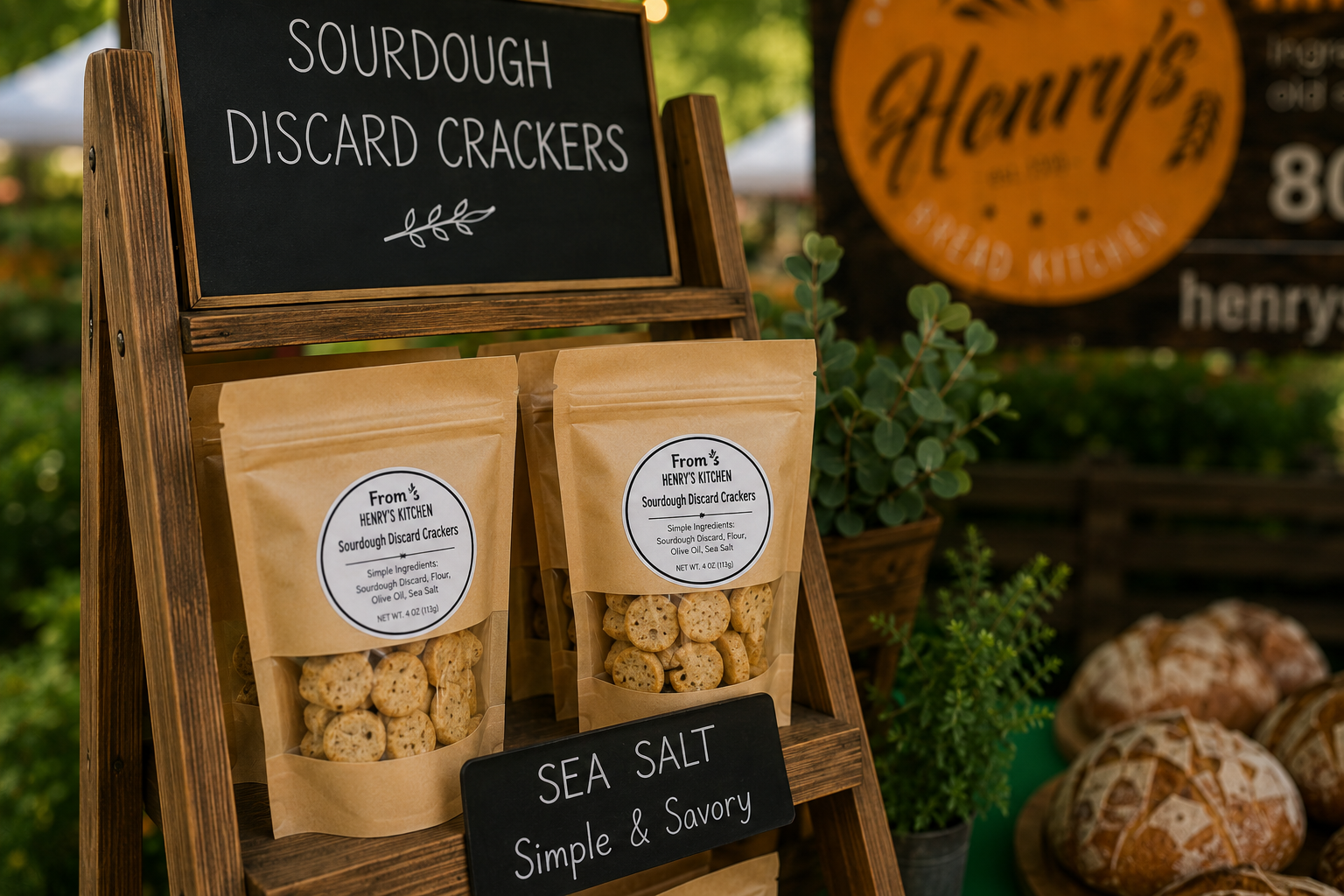
Bring fewer things, made well. Cover three jobs with four or five products: an anchor loaf you're known for, a small range that serves your customers, and a high-margin easy win on the way out.
Narrow beats wide. Every time.
Most bakers think the cure for a slow market is more variety. It's the opposite. A long menu costs you at the mixer, where every extra product is another dough to track at four in the morning. It costs you on the table, where twenty options make a customer freeze and walk off to think about it. And it costs you in leftovers, because when you spread your baking thin you can't predict what sells, so you over-bake to cover yourself and drive half of it home.
Your anchor: the loaf you're known for
Your anchor is the one people drive across town for. You only need one, but you have to have it. A country sourdough is the classic: shelf-stable, high perceived value, the thing they can't get off a grocery shelf. Pick it, perfect it, and put it at the front of the table every Saturday.
Your range: two or three that keep the anchor company
Your range is two or three products that round out the table without scattering you. A soft sandwich loaf for the families that need school lunches Monday morning. Focaccia sold by the square, high yield off a single pan, samples beautifully. Pick by who you serve, not by what you feel like baking that week.
Your easy win: the high-margin grab on the way out
Your easy win is the small thing customers add at the last second. Sourdough discard crackers made from starter you'd otherwise pour down the drain. A simple enriched sweet whose smell does the selling. These cost you almost nothing and they add up fast across a market day.
Anchor, range, easy win
Cover those three jobs and you've got a complete table with four or five products, which is all you need to start. Stop trying to be everything. Be the bakery that nails a short, honest lineup and shows up with it every week. That's what builds regulars.
One dough, many products
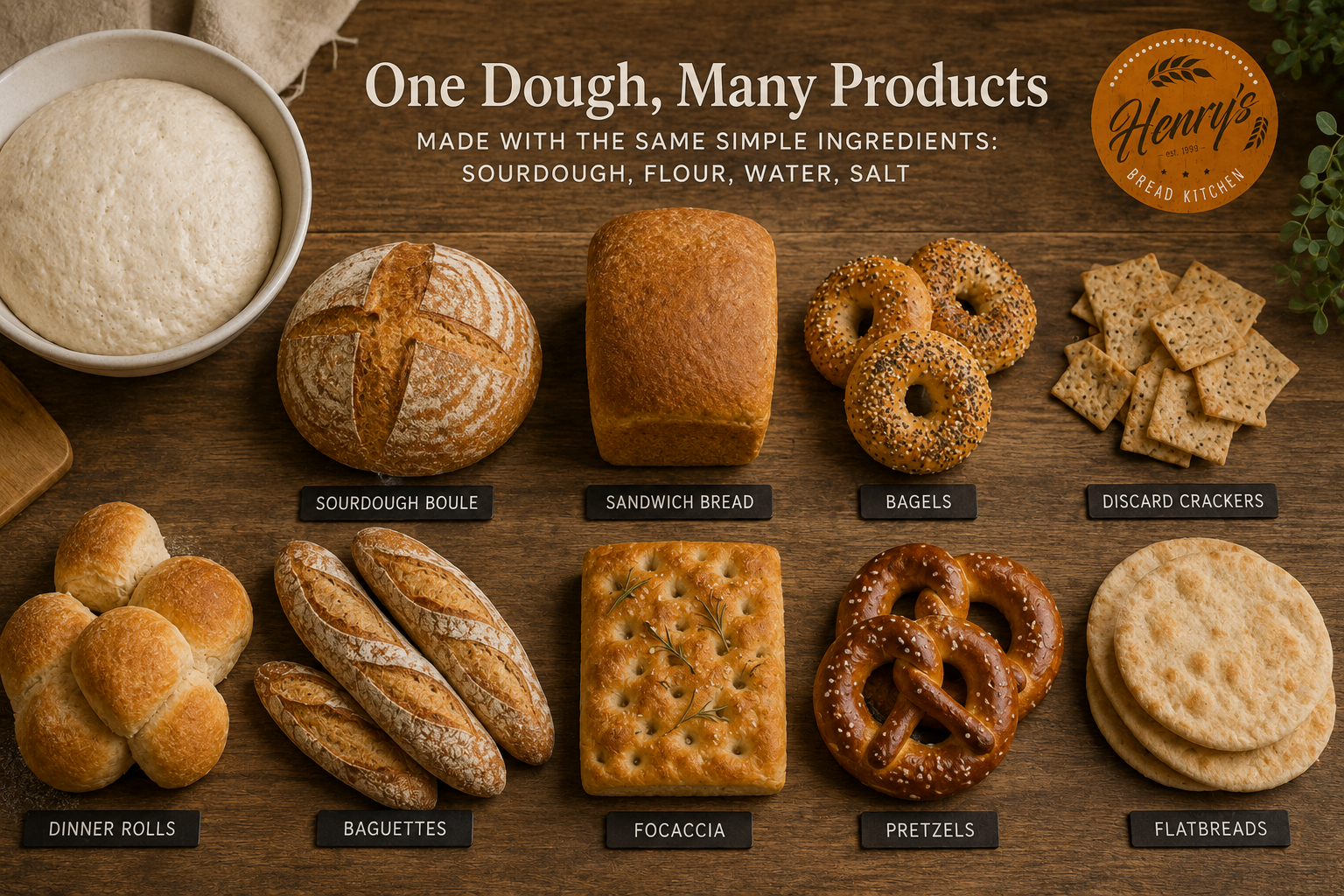
Here's the move that ties it together. A single enriched dough becomes cinnamon rolls, sticky buns, a braided loaf, and dinner rolls from one mixing. Your sourdough base becomes boules, sandwich bread, bagels, focaccia, baguettes, pretzels, flatbreads, and discard crackers. You're not running five separate bakes. You're running one or two doughs and shaping them into a full table. That's how a market baker actually earns a living instead of just staying busy.
The short version, and where it goes deeper
That's the framework. The full breakdown goes deeper: a sample lineup you could bring this Saturday, real price ranges, the breads that quietly lose you money, and how cottage food law decides what's even legal to sell from a home kitchen. Knowing what to bake is the start. Inside From Oven to Market, Recipe Pantry Pro runs the cost and profit on every product, from a single loaf to a full market table, so you know which items actually pay before you commit a mixing.
Frequently asked questions
How many products should I bring to a farmers market?
Four or five is plenty to start. One anchor loaf, two or three supporting products, and one high-margin easy win like discard crackers. A short lineup made well outsells a long lineup spread thin.
What is the anchor, range, easy win framework?
Your anchor is the loaf you're known for, usually a country sourdough. Your range is two or three products that serve your customers, like a sandwich loaf and focaccia. Your easy win is a high-margin add-on like sourdough discard crackers that costs almost nothing to make.
How do bakers run a full market table without baking all night?
One dough, many products. A single enriched dough shapes into cinnamon rolls, sticky buns, a braided loaf, and dinner rolls. A sourdough base becomes boules, sandwich bread, focaccia, bagels, and discard crackers. You run one or two doughs and shape them into a full lineup.
Why does a long menu hurt sales at a farmers market?
It costs you at the mixer, on the table, and in leftovers. More products mean more doughs to track, more options that freeze the customer's decision, and less ability to predict what sells, so you over-bake and drive the surplus home.
Keep going
- Build the full system: From Oven to Market
- Production recipes and costing: Recipe Pantry Pro
- Everything for your booth: Market Kit
- Read the full article: Full article coming soon
Ready to build the full system?
This guide is the short version. From Oven to Market is the whole course: legal setup, true-cost pricing, branding, booth, and an AI-built storefront, step by step.
See From Oven to MarketPerfection is not required. Progress is.